
Venue & Hospitality
Conference Dates:
Hotel Services & Amenities
- Audio/Visual Equipment Rental.
- Business Center.
- Business Phone Service.
- Complimentary Printing Service.
- Express Mail.
- Fax.
- Meeting Rooms.
- Office Rental.
- Photo Copying Service.
- Secretarial Service.
- Telex.
- Typewriter.
- Video Conference.
- Video Messaging.
- Video Phone.
- ATM.
- Baggage Storage.
Transportation
About City
Rome is the capital city of Italy and one of the most historically, culturally, and architecturally significant cities in the world. Located in the central-western part of the Italian peninsula along the Tiber River, Rome has a history that spans more than 2,500 years. It was once the heart of the mighty Roman Empire, which shaped much of Western civilization in terms of law, governance, architecture, engineering, and culture. Today, Rome is a modern metropolitan city while still preserving its ancient heritage, making it a unique blend of the past and present. The city is often referred to as the “Eternal City” because its importance has remained continuous through centuries of political, religious, and cultural transformations.
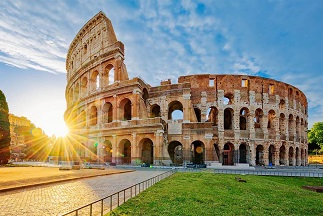
One of the most remarkable aspects of Rome is its extraordinary collection of historical monuments and archaeological sites. The Colosseum, one of the most iconic structures in the world, stands as a symbol of ancient Roman engineering and gladiatorial combat. Nearby, the Roman Forum once served as the center of political, commercial, and judicial life in ancient Rome, and today it remains an open-air museum of ruins that reflect the grandeur of the empire. Another significant landmark is the Pantheon, a remarkably well-preserved ancient temple known for its massive dome and oculus, which continues to inspire modern architecture.
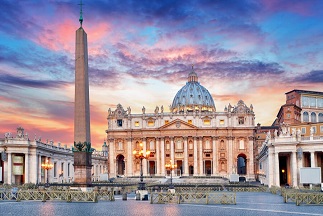
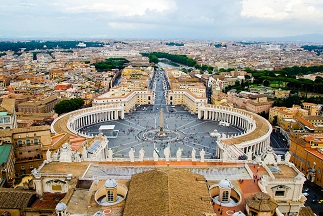
Rome is also the center of the Roman Catholic Church and is home to Vatican City, the smallest independent state in the world. Within Vatican City lies St. Peter’s Basilica, one of the largest and most important churches globally, as well as the Sistine Chapel, famous for Michelangelo’s ceiling frescoes. These sites make Rome not only a historical capital but also a major spiritual destination for millions of pilgrims each year.
Beyond its ancient and religious significance, Rome is a vibrant modern city with bustling streets, lively neighborhoods, and a rich culinary tradition. Italian cuisine is deeply embedded in Roman culture, with famous dishes such as pasta carbonara, amatriciana, and cacio e pepe originating from the city. Cafés, gelaterias, and traditional trattorias are found throughout Rome, offering both locals and tourists an authentic taste of Italian lifestyle.
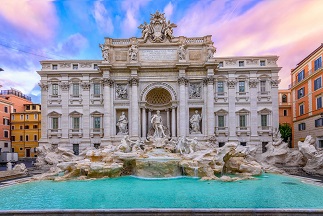
Rome is also an important political, educational, and economic center in Italy. It hosts government institutions, international organizations, universities, and cultural institutions. The city’s transportation system includes metro lines, buses, and an extensive railway network connecting it to other parts of Italy and Europe. Despite being a large and modern city, Rome maintains a unique charm through its cobblestone streets, historic piazzas like Piazza Navona and Piazza di Spagna, and fountains such as the world-famous Trevi Fountain, where visitors traditionally throw coins to ensure their return to the city.
In essence, Rome is a city where history and modern life coexist seamlessly. Its ancient ruins, religious landmarks, artistic treasures, and contemporary urban culture make it one of the most fascinating destinations in the world. Whether explored for its archaeological wonders, spiritual significance, or vibrant street life, Rome continues to captivate millions of visitors every year and remains a timeless symbol of human civilization and cultural achievement.